Every part checked, every result recorded.
What It Is
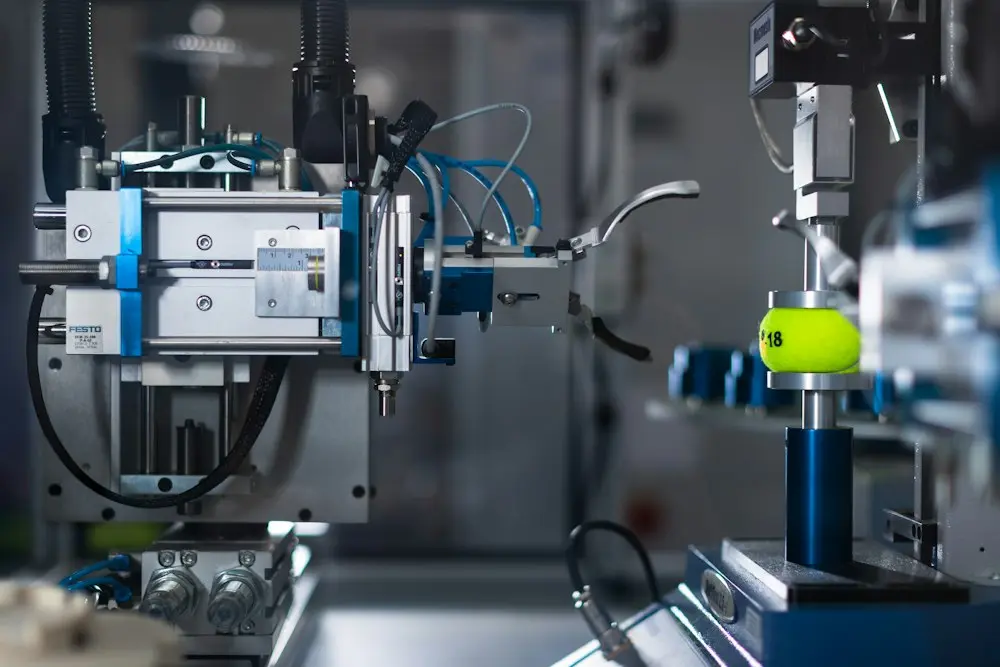
A vision station is a camera, the right lens and lighting, and software that decides pass or fail in milliseconds. Classic rule-based tools measure dimensions, check presence and read codes; deep-learning models handle the defects that are hard to describe - scratches, stains, wrinkles, foreign matter.
The station talks to the line controller, so a failed part is rejected automatically, and every result is logged with its image and a timestamp or serial number for traceability.
How It Works
The system from the sensor to the people who act on it. Every project is sized to the site, but the layers stay the same.
- Sense
Camera & lighting
Area-scan or line-scan cameras with backlight, dome or coaxial lighting chosen for the defect.
- Edge
Vision controller
An industrial PC or GPU module runs the measurement tools and the AI model at line speed.
- Control
PLC & reject
Pass/fail goes to the PLC over digital I/O or fieldbus; a pusher, air blast or diverter removes the reject.
- Store
Image archive
Results and images are stored against batch, time or serial number.
- Act
Quality dashboards
Defect rates by shift, product and station, with images for review and re-training.
Key Technologies
The protocols, standards and components we work with on this use case.
Imaging
- Area-scan cameras
- Line-scan cameras
- GigE Vision
- USB3 Vision
- GenICam
- Telecentric lenses
Software
- Deep-learning classification
- Anomaly detection
- OCR / OCV
- 1D & 2D code reading
- OpenCV
- ONNX / TensorRT
Integration
- Digital I/O
- PROFINET
- EtherNet/IP
- Modbus TCP
- Encoder triggering
- Reject mechanisms
Typical Deliverables
What a project usually hands over. We agree the exact scope with you before work starts.
- Feasibility trial on your real parts, with good and bad samples
- Camera, optics and lighting design for the station
- Trained models and inspection recipes per product
- PLC integration and automatic reject
- Operator screen for results, recipes and changeovers
- Image archive and defect reporting
Where It Applies
Industries where this use case answers a problem we see often. Each links back to the sector page.
Related Use Cases
Edge AI
AI models that run next to the machine, fast and without depending on the cloud.
Learn moreQuality analytics
SPC and AI that find the process drift behind defects before they pile up.
Learn moreTrack & trace and serialisation
Unique codes on every unit, aggregated to case and pallet, verified at speed.
Learn more
Let's Scope Your Project.
Tell us about your site and what you want to improve. Our engineers will help you scope a practical first step.