Let robots do the walking.
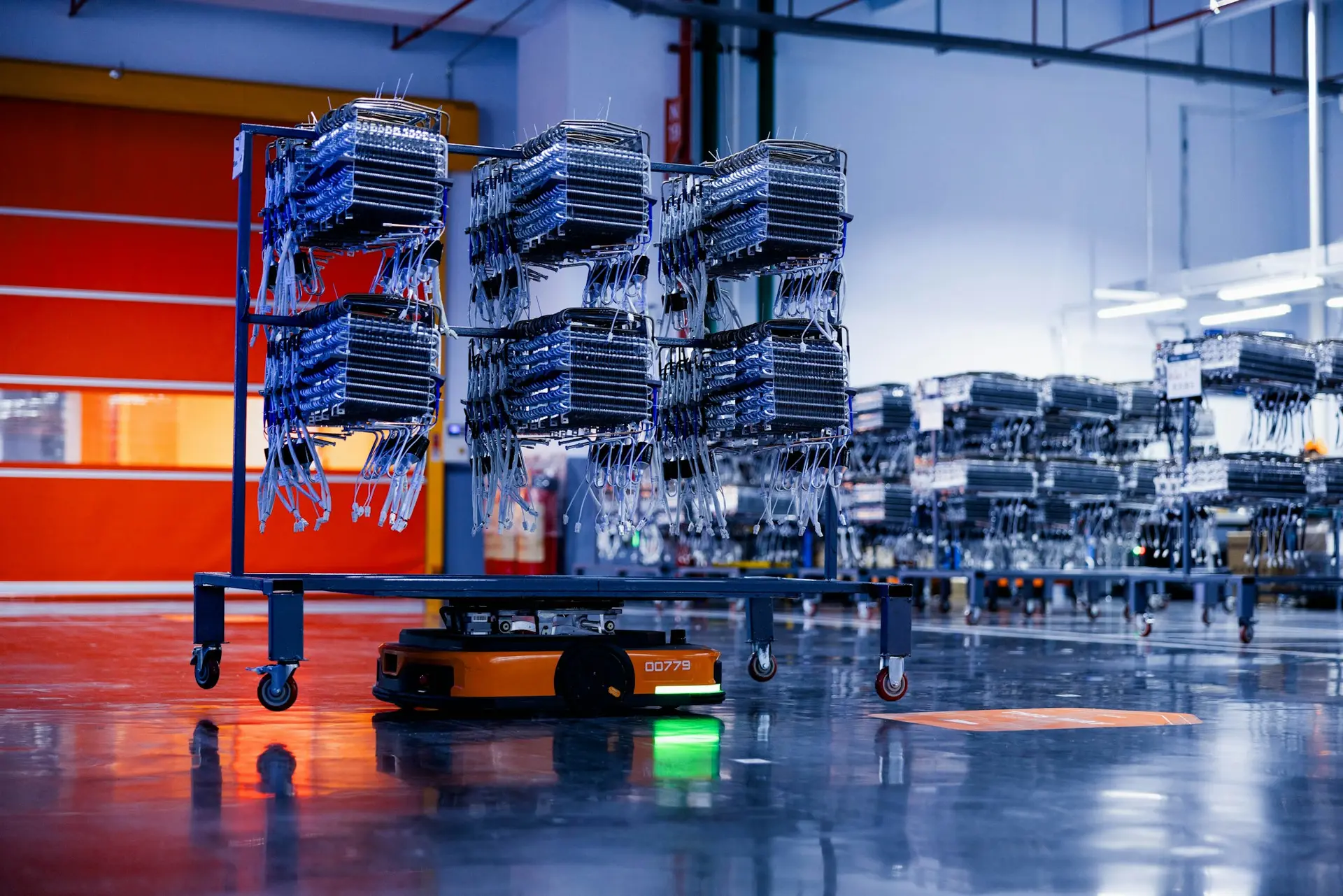
What It Is
AGVs follow fixed paths - magnetic tape, QR markers or reflectors - and suit repeatable routes. AMRs build a map with LiDAR and cameras and plan their own way around people and obstacles, which makes them easier to change as the layout changes.
The robots are the visible part. The work that makes them pay is the flow study, the fleet manager that assigns missions, safe interaction with people and forklifts, and integration with the WMS, MES, doors, lifts and conveyors they meet.
How It Works
The system from the sensor to the people who act on it. Every project is sized to the site, but the layers stay the same.
- Robot
AMR / AGV
Mobile robots with LiDAR, safety scanners and the right top module: lift, tugger, roller or shelf.
- Navigate
Map & localisation
SLAM maps, zones, speed limits and one-way lanes set for the site.
- Connect
Wi-Fi & I/O
Industrial Wi-Fi with roaming, plus I/O to doors, lifts and conveyors.
- Orchestrate
Fleet manager
Assigns missions, manages traffic and charging across robots, even from mixed vendors.
- Integrate
WMS / MES
Missions triggered by orders and stock movements, with status sent back.
Key Technologies
The protocols, standards and components we work with on this use case.
Robots
- AMR
- AGV
- Tuggers
- Pallet movers
- LiDAR SLAM
- Safety laser scanners
Standards
- ISO 3691-4
- VDA 5050
- ISO 13849
- ROS 2
Integration
- Fleet management
- WMS / MES APIs
- OPC UA
- Industrial Wi-Fi
- Door & lift interfaces
Typical Deliverables
What a project usually hands over. We agree the exact scope with you before work starts.
- Flow study and simulation of routes and robot count
- Robot and top-module selection
- Site mapping, zones and traffic rules
- Fleet manager set-up and system integration
- Risk assessment and safety validation
- Training and support for the operations team
Where It Applies
Industries where this use case answers a problem we see often. Each links back to the sector page.
Related Use Cases
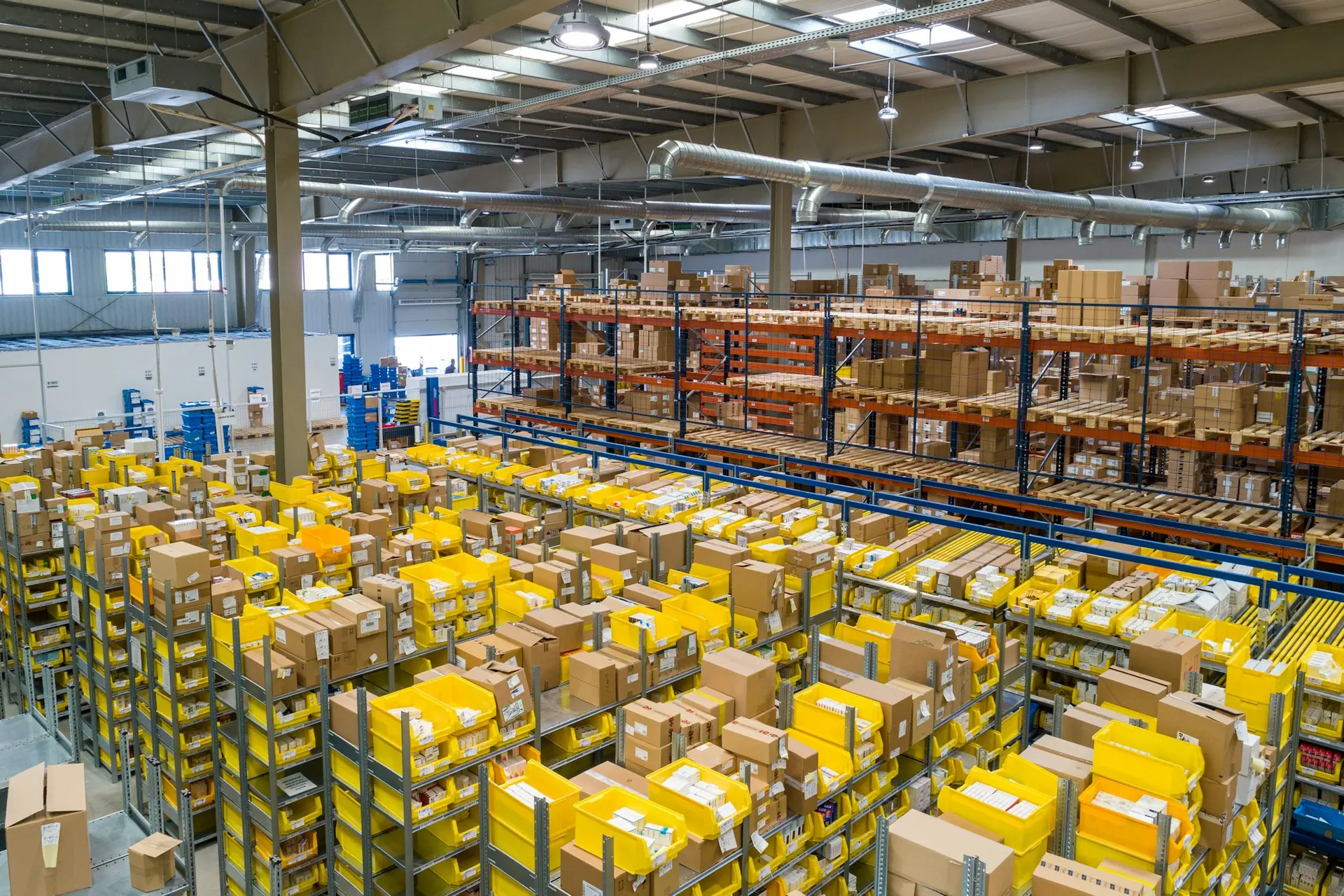
Warehouse automation
Scanning, sorting and picking systems that keep stock accurate and orders moving.
Learn moreSafety monitoring
Vision AI that spots near misses and keeps people clear of moving machines.
Learn moreRobotic cells
Industrial robots and cobots for welding, handling, packing and machine tending.
Learn more
Let's Scope Your Project.
Tell us about your site and what you want to improve. Our engineers will help you scope a practical first step.